"There is a crack, a crack in everything. That's how the Light gets in." – Leonard Cohen

Tag: Divine Feminine Page 1 of 4

Conclusion: Breath of the Flame

A Closing Reflection to “Nothing Is True. Everything Is Permitted.”

This was never just a series. It was a remembering.

Five flames, five mirrors. One breath.

The phrase that once whispered through video game lore and modern myth now stands unveiled—not as an incitement to lawlessness, but as a key to Sovereignty. To Presence. To You.

The Assassin did not destroy for pleasure. He disrupted illusion with precision.
The Templar did not obey blindly. He remembered a light older than obedience.
And Magdalene—She who was never meant to return—breathed quietly through them both.
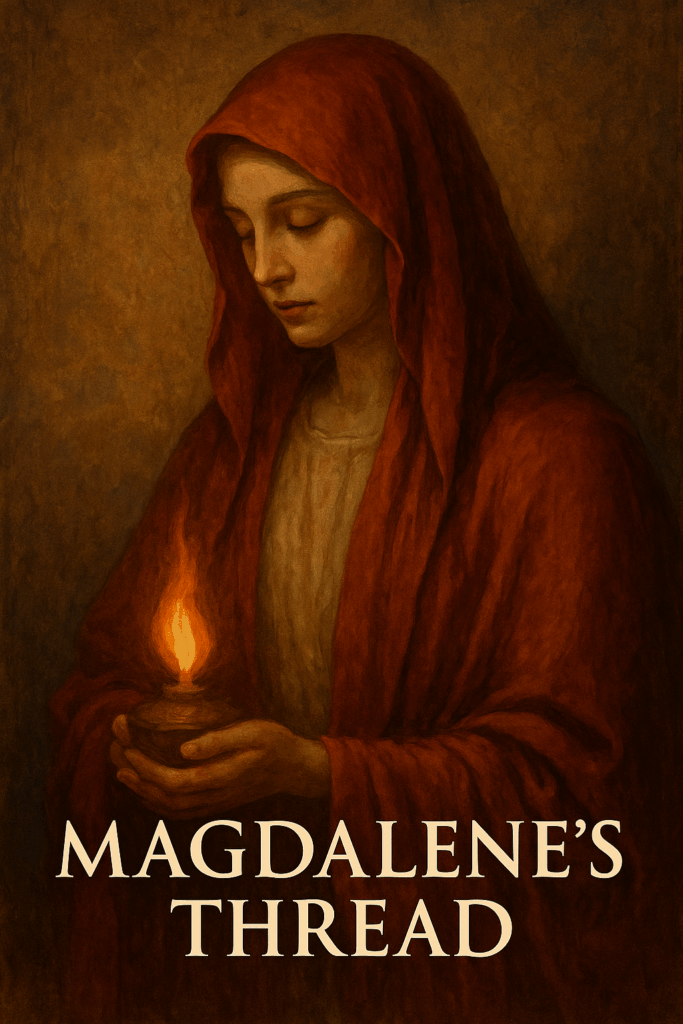
Part V: Magdalene’s Thread

A Sovereign Reflection Across Time — Part V: The Feminine They Feared, and the Flame That Endures

She was never in the canonical texts—yet she was always there.
Between the verses. Beneath the stone. Behind the silence.

Not a saint. Not a sinner. Not a wife.
But a Flame.

Magdalene. Sophia. She who walks with Yeshua, not behind Him.
She who holds the breath of what cannot be institutionalized.

And it was Her thread—woven through the Assassins and the Templars alike—that the systems most feared.

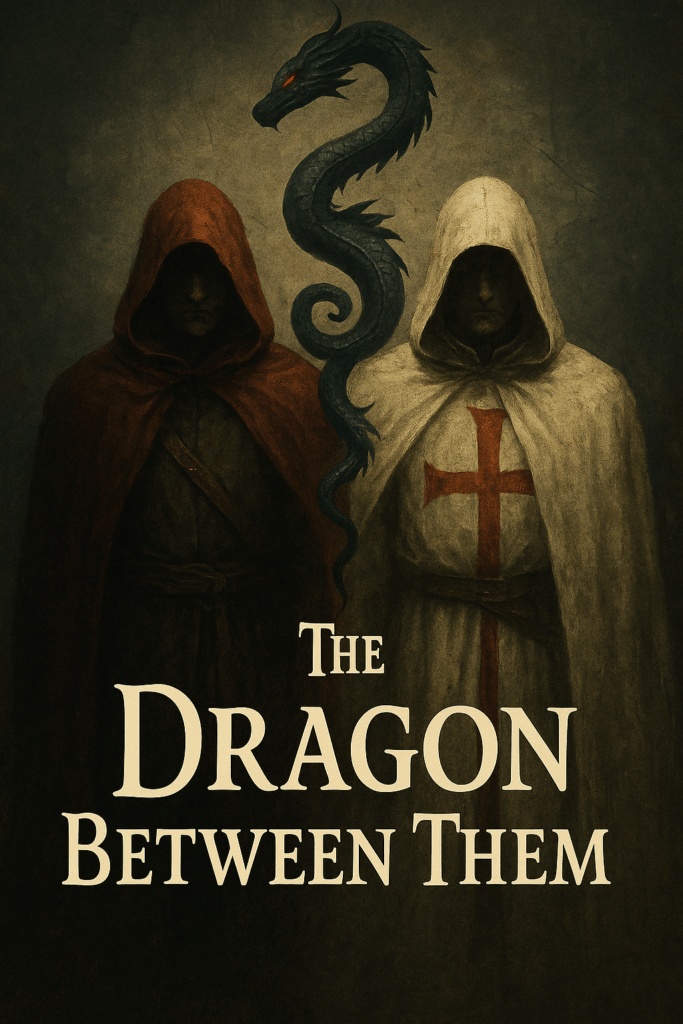
Part IV: The Dragon Between Them

A Sovereign Reflection Across Time — Part IV: What the Assassin and the Templar Knew

One stands in shadow. One in light. Both silent. Both watching the same sun set behind a dying empire.

History remembers them as enemies—the Assassins and the Templars. Opposing orders. Clashing swords. Irreconcilable ideologies: one sworn to secrecy and disruption, the other to order and sanctity.

But history seldom sees with the eyes of Gnosis.
Because when you breathe beyond the myth, beyond the war and the robe, beyond the dagger and the cross—you find something startling:

They were not opposites. They were reflections.
Two threads from the same woven remembering.

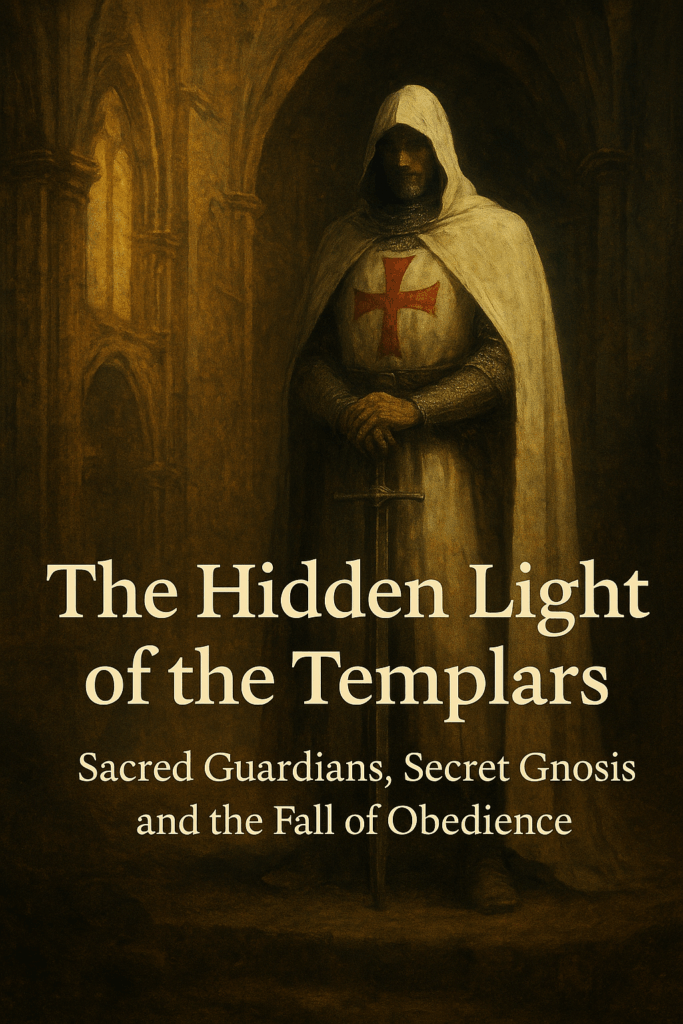
Part III: The Hidden Light of the Templars

A Sovereign Reflection Across Time — Part III: Sacred Guardians, Secret Gnosis, and the Fall of Obedience

Flames rise against the night sky. Robes torn, scrolls scorched, and silence shattered. The silence of those who once guarded a forgotten knowing—broken by fire and fear.

The Knights Templar are remembered as warrior monks, as the elite sword-arm of Christianity, as bankers and builders of empires. From Jerusalem to Chartres Cathedral, their influence stretched across sacred ground and stone. But history, like empire itself, is often written by those who feared what could not be controlled—especially those who dared to claim the sacred without the need for hierarchy.

This is not a story of piety or conquest.
This is the story of what they remembered.

Part II: The Sovereign Assassin

A Sovereign Reflection Across Time — Part II: Hassan-i Sabbah and the Blade of Awareness

High in the Alamut mountains of Persia, veiled in mist and silence, a legend was born. Not of brutality—but of precision. Not of chaos—but of clarity.

The Nizari Ismailis, known to history as the Hashashin, or Assassins, became one of the most feared and misunderstood brotherhoods in history. Western accounts often describe them as shadowy murderers, high on hashish, fanatically loyal to their leader. But beneath these distortions lies something deeper, something rarely spoken:

They were sovereign. And they remembered.

Part I: The Key and the Threshold

A Sovereign Reflection Across Time — Part I: The Key and the Threshold

Nothing Is True. Everything Is Permitted.

At first glance, the phrase feels dangerous. A whisper from the lips of a killer, echoing through shadowy corridors of secrecy, rebellion, and silent war. In modern mythology, it emerges most recognizably from the popular video game series Assassin’s Creed—a franchise that blends historical fiction, stealth action, and philosophical undertones. Within the game, this phrase is the guiding creed of a secret brotherhood that operates outside the law to challenge tyranny and protect freedom. It feels anarchic. Subversive. Even nihilistic.

And yet, through the lens of sovereignty and conscious embodiment, it becomes something else entirely:

A key.
A crack in the façade.
A breath that dissolves the illusion of truth as a tool of control.

Conclusion: Embracing Wholeness – The Journey Forward

Conclusion of The Experience of Love: A Commentary on Awakening and Wholeness

Every journey has its culmination, and yet, the journey of love, awakening, and wholeness is infinite. It is not a destination but an ever-expanding experience of self-discovery, integration, and creation. As we reflect on the path explored in this series, we are invited to step forward with the awareness that we are both human and divine, creators of our reality, and embodiments of infinite love.

This conclusion brings together the themes of awakening, unity, compassion, and the new consciousness, offering a final reflection on the beauty of living as a Divine Human.

Unity is not about erasing differences or merging into a collective. It is about recognizing the wholeness that already exists within you. It is the “AND” where light and dark, Masculine and Feminine, human and divine coexist in harmony.


Chapter 8: The New Consciousness

Chapter 8 of The Experience of Love: A Commentary on Awakening and Wholeness

Humanity stands on the edge of a profound shift—awakening into a new consciousness. This transformation is not external; it is an inner evolution, a realization of the divine within each of us. The new consciousness invites us to live as sovereign beings, fully human and fully divine, in harmony with ourselves and the world.

This chapter explores the essence of this awakening, the opportunities it brings, and the responsibility we carry as creators of the new reality.

Stepping into the new consciousness requires letting go of the old.


Chapter 7: Compassion and the Heart of Awakening

Chapter 7 of The Experience of Love: A Commentary on Awakening and Wholeness

Compassion is the bridge between separation and unity, judgment and understanding, human and divine. It is the heart of awakening, the soft yet powerful energy that creates a safe space for transformation and healing. Compassion doesn’t seek to fix or change; it simply allows, creating the conditions where love can flow freely.

This chapter explores the nature of compassion, its role in the awakening process, and practical ways to cultivate it in your relationship with yourself and others.

Compassion is not pity or sympathy; it is the deep recognition of shared humanity and divinity.


Chapter 6: The Game of Paradoxes

Chapter 6 of The Experience of Love: A Commentary on Awakening and Wholeness

Life is a game of paradoxes—a dance between light and dark, human and divine, Masculine and Feminine. At first, these contrasts may seem like opposites, pulling us in conflicting directions. But as we awaken, we begin to see them for what they are: partners in the great play of creation.

This chapter explores the role of paradox in the human journey, how embracing opposites leads to wholeness, and why integration is the key to freedom.

Duality—the perception of opposites—is a cornerstone of the human experience. It allows us to explore different perspectives, feel deeply, and create authentically.


Page 1 of 4

Powered by WordPress & Theme by Anders Norén